
Skin Cancer Check: Single Spots Only, Not Full Body Checks
Dr Patti Piper no longer offers full body skin checks, so she can focus her time on Aesthetica's cosmetic treatments. If one particular mole or spot is worrying you, she is happy to look at it, and she will advise everyone to have a full body skin check with a dedicated skin cancer clinic or their GP. If you are already one of Dr Patti's melanoma follow-up patients, your existing review schedule continues as arranged.
Ask about a mole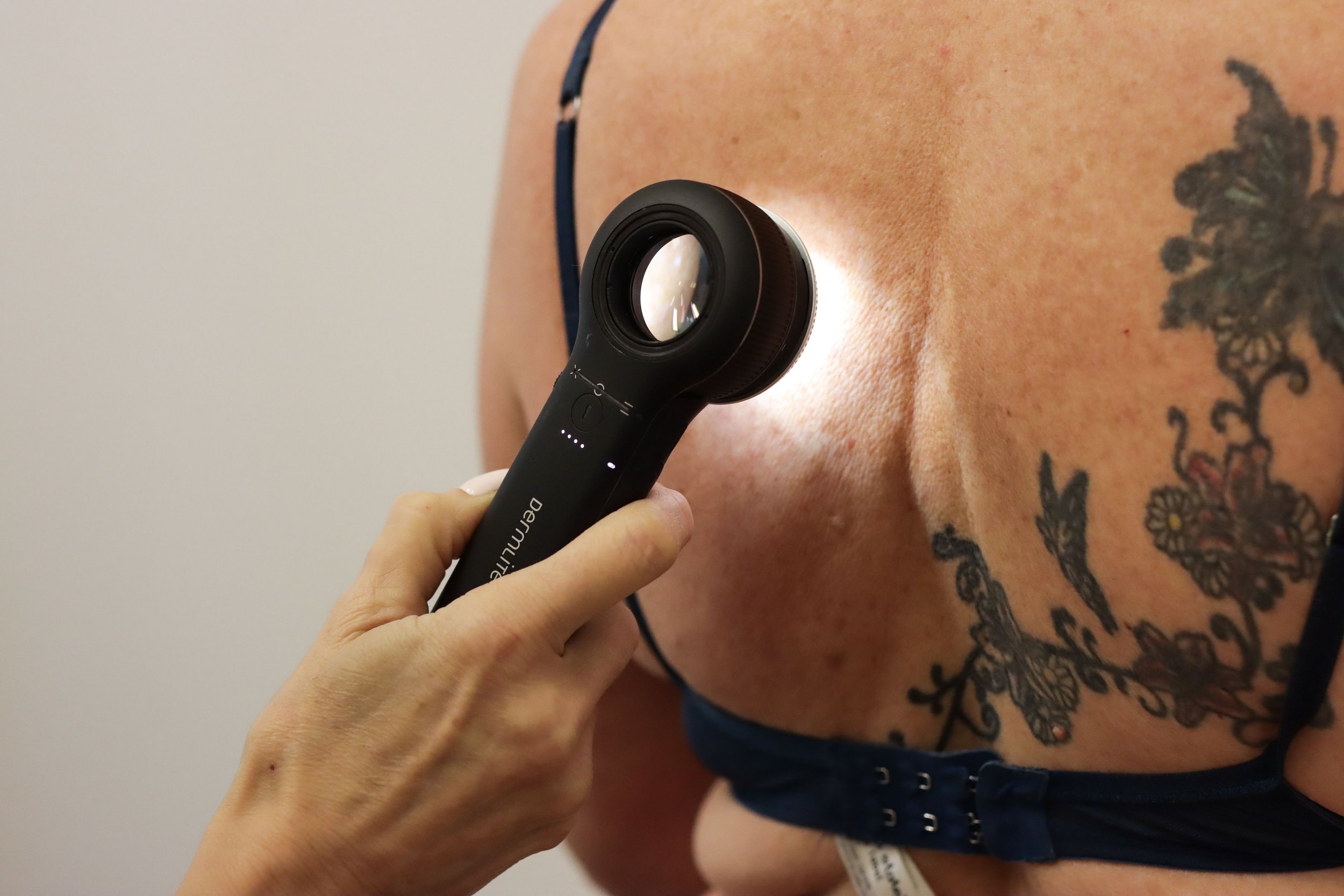
New Zealand has the highest melanoma incidence in the world, making regular checks worthwhile for most adults.
This is why Dr Patti advises every patient to have a full body skin check, even though she no longer performs them herself. What she will do is look at one mole or spot that is worrying you, examining it with a dermascope, a skin microscope that magnifies it 10 times, and photographing it through the dermascope with the image recorded on your file. That photographic record allows accurate follow-up over time, so any change in a mole can be identified and acted on quickly rather than relying on memory alone.
What happens when Dr Patti looks at a spot
If one mole or spot is worrying you, Dr Patti will examine it using a dermascope, a skin microscope that magnifies it 10 times, and photograph it through the dermascope with the image recorded on your file. She will also advise you to have a full body skin check with a dedicated skin cancer clinic or your GP, since a single spot examination is not a substitute for one.
If a lesion looks suspicious for melanoma, it is completely excised and sent to the laboratory for a tissue diagnosis. Because Dr Patti performs all the skin cancer surgery in her own practice, a punch biopsy or excision can usually be carried out at the same practice rather than referring you elsewhere and starting the process again.
Good to know
Skin cancers fall into two broad categories: melanoma, and non-melanoma skin cancer (NMSC), which is further divided into squamous cell carcinomas (SCC) and basal cell carcinomas (BCC). Correctly telling these apart matters, because certain SCCs on the face and scalp can spread through the body in a similar way to melanoma, so an accurate diagnosis is important rather than assuming all NMSC behaves the same way.
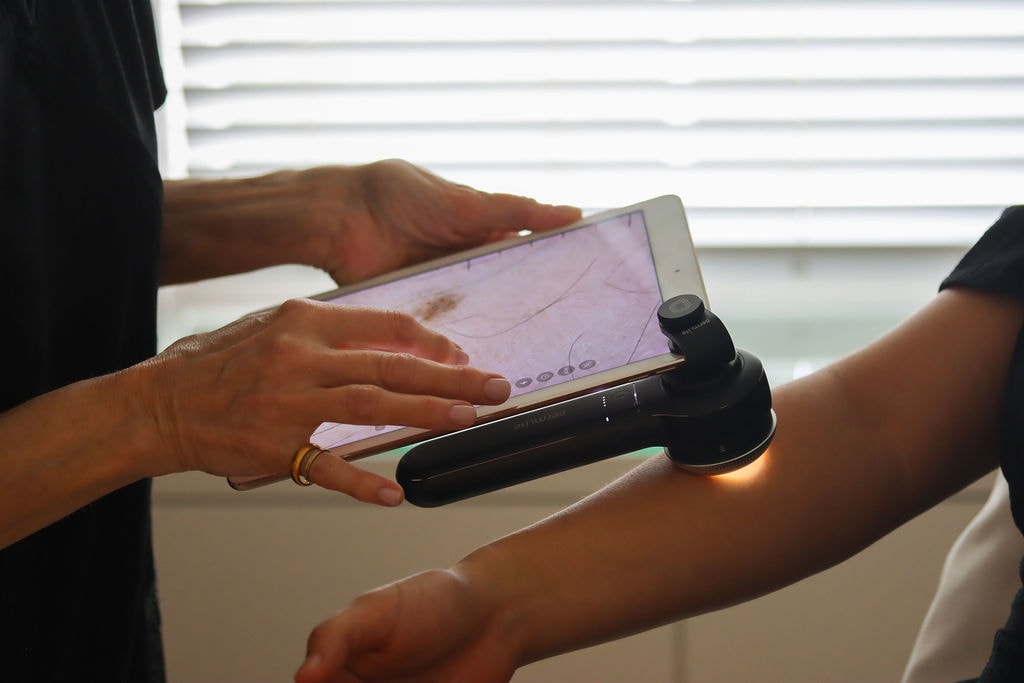
Trained to find it, and trained to treat it.
Dr Patti trained first in general surgery and then in neurosurgery before moving into general practice, and she holds the Diploma of the Skin Cancer College of Australasia and full membership of the New Zealand Skin Cancer Doctors. She performs all the skin cancer surgery in her own practice, so if a lesion needs a punch biopsy or excision, she can carry this out herself rather than referring you elsewhere and starting the process again. That depth of experience is behind both her continuing care of existing melanoma follow-up patients and her advice that everyone should have a full body skin check, even though she no longer performs them herself.
Frequently asked
If a lesion looks suspicious, Dr Patti explains why, using the photographic images taken through the dermascope during your examination. Sometimes the diagnosis is clear from the dermascope alone, other times a punch biopsy is needed to confirm it, involving a small local anaesthetic injection followed by a tiny tissue sample sent to the laboratory. Because Dr Patti performs skin cancer surgery herself, she can usually carry out any biopsy or excision required at the same practice rather than referring you elsewhere.
A useful self-check is the SCAN framework: Sore, Changing, Abnormal or New. Any mole or lesion that is sore, has changed in size, shape or colour, looks abnormal compared with your other moles, or has appeared recently is worth having examined. A full skin cancer check goes further than a self-check, since a dermascope can identify features invisible to the naked eye, and a photographic record allows accurate comparison at your next visit.
How often you should be checked depends on individual risk factors, including skin type, family history and past sun exposure, so this is worth discussing with whoever carries out your full body skin check. People with fair skin, a history of sunburn, or previous skin cancers are generally advised to have more frequent checks than those with lower risk. Dr Patti advises everyone to have a full body check, and is happy to look at any single spot that worries you in the meantime.
The examination itself is not painful, since it involves careful visual inspection with a dermascope rather than any cutting. If a punch biopsy is needed to confirm a diagnosis, local anaesthetic is injected around the lesion first, so the procedure is designed to be painless. A small tissue sample is then taken and sent to the laboratory, with only mild tenderness expected at the site afterwards.
No referral is needed to have a single mole or spot looked at, and none is required for existing melanoma follow-up patients continuing their arranged review schedule with Dr Patti. A full body skin check is a different appointment, and Dr Patti will point you towards a dedicated skin cancer clinic or your GP for that.
No. Dr Patti Piper no longer offers full body skin examinations, so she can focus her time on Aesthetica's cosmetic treatments. She is happy to look at one particular mole or spot that is worrying you, examined by dermascope, and she advises everyone to have a full body skin check with a dedicated skin cancer clinic or their GP, since New Zealand has the highest melanoma incidence in the world. If you are already one of Dr Patti's melanoma follow-up patients, your existing review schedule continues as arranged directly with the clinic. Dr Patti also continues to offer mole removal for cosmetic reasons, with every lesion checked by dermascope first: see the Mole Removal page.
Worried about one particular spot?
Dr Patti does not offer full body skin checks, and advises everyone to have one with a dedicated skin cancer clinic or their GP. She is happy to look at a single mole or spot that concerns you. If you are an existing melanoma follow-up patient, your next review will be arranged directly with the clinic as usual. For cosmetic mole removal, see the Mole Removal page or get in touch below.